How Custom Builders Distinguish Their Designs Through Subtle Design Language
Sport-fishing boats are a lot like horses. Unless you have a trained eye to identify the differences between various builds, the only thing that helps each one stand apart from the other, for the casual onlooker anyway, often boils down to color and size. Yet for those who spend their lives on the water, the distinctions between a Scarborough, a Spencer, a Jarrett Bay, a Bayliss, a Winter Custom Yacht, or a Ramsey build are as clear as the differences between horse breeds in a field.
As marine industry professionals and lifelong enthusiasts have long understood, North Carolina's custom boat builders have developed a sophisticated visual language over decades of refinement. While discussing what features make a Spencer different from others, Daniel Spencer of Spencer Yachts offered an apt comparison: "You might be able to tell me the breed and a whole lot of other things about a horse standing in a field just by looking at it, but I'd only be able to tell you that it looks like an Indian pony in a Western movie. It can be hard to explain how you know the difference, but you just do, and that's how it can be with North Carolina's boats." The challenge of identifying modern sport-fishers has become more arduous than ever before. When builders Tim Winters, Paul and Daniel Spencer, Ricky Scarborough Jr., John Bayliss and Randy Ramsey gathered to discuss the topic, each agreed that seeing the differences in a lineup of sport-fishing boats is trickier now than it has ever been. Some were hesitant to share too much for fear of giving away sacred trade secrets, yet all acknowledged that modern custom boatbuilding has evolved in ways that blur traditional distinctions while simultaneously creating new ones. Following the hardships of World War II, the waterfronts of North Carolina welcomed a surge in the charter-fishing industry. Professional fishermen such as Warren O'Neal, Buddy Davis, Sunny Briggs, Ricky Scarborough Sr., Omie Tillett and Buddy Cannady built boats out of necessity, unable to afford new charter vessels. Inspired by well-established Florida builders like the Ryboviches, North Carolina's craftsmen began tailoring their builds to fit their own fishery, one often plagued by rough seas, long rides to the Gulf Stream and treacherous inlets. The result was a distinctive approach emphasizing seaworthiness, dry rides and superior fish-handling capabilities. Most people would recognize a classic Carolina boat for its seaworthiness and, of course, its generous flare.
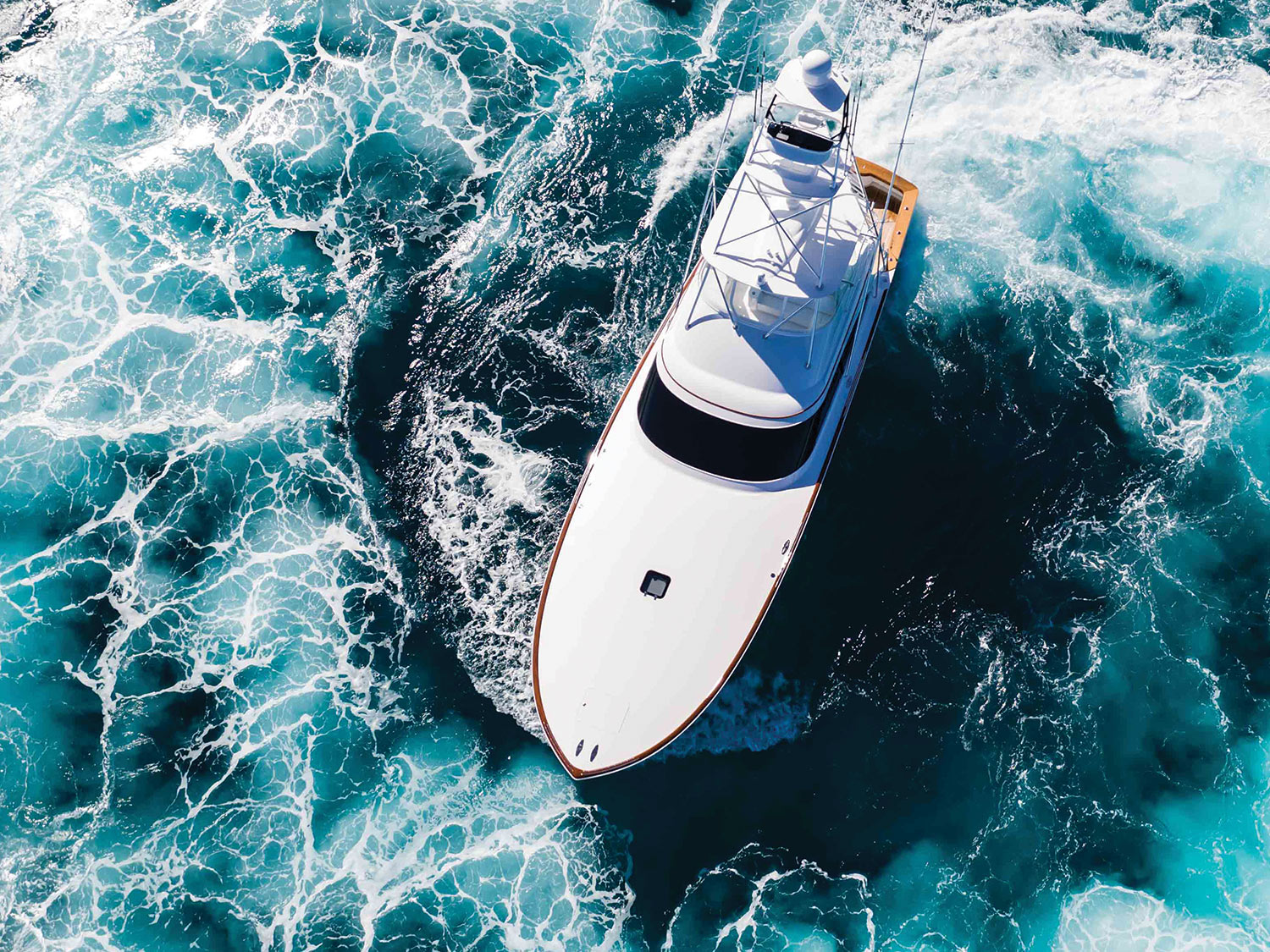
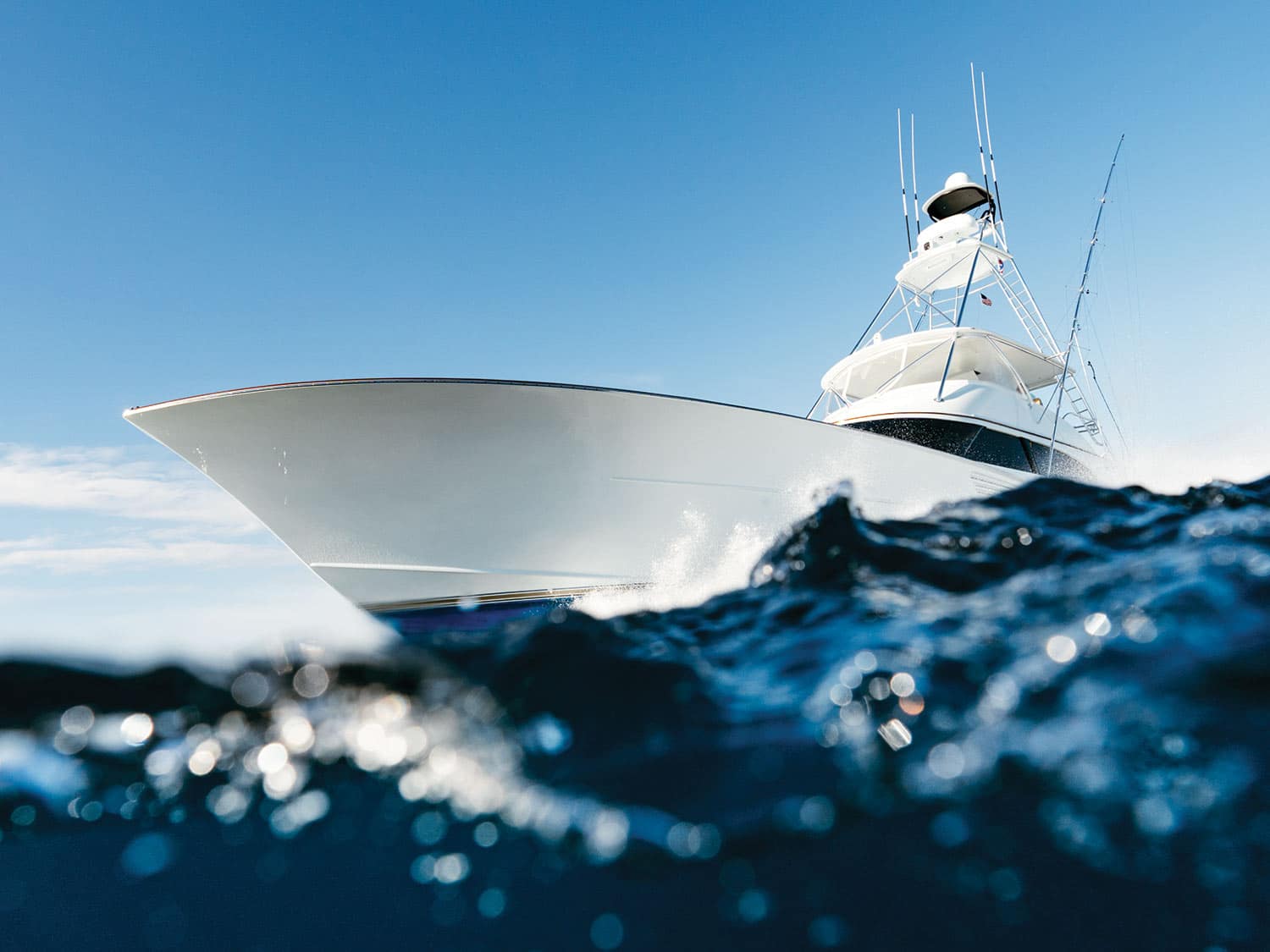
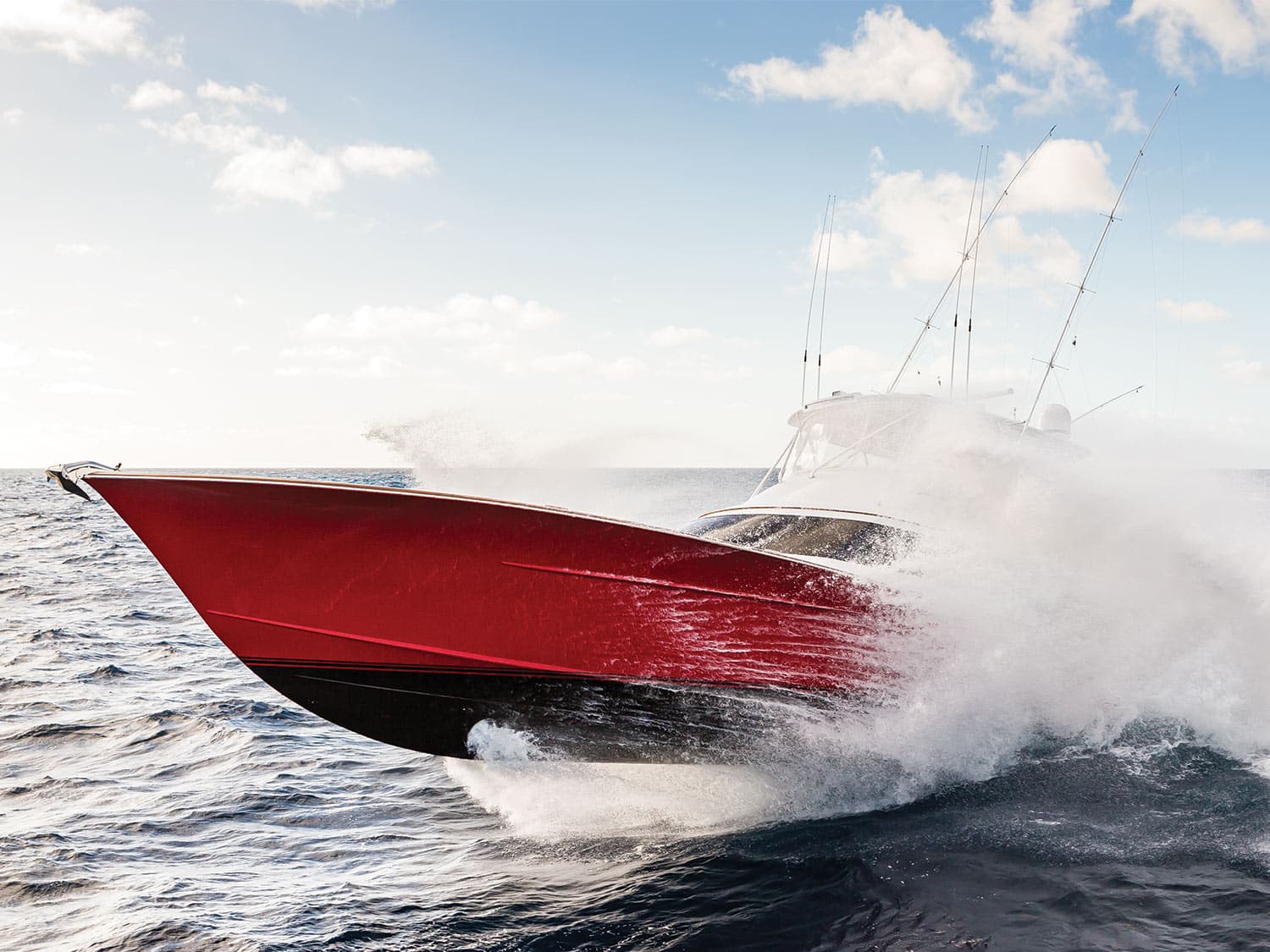
A generous amount of bow flare and a broken sheer, where the sheerline of the toe rail curves down at the point where the covering board meets the bow deck, are perhaps the two most immediately noticeable elements of the old-school approach. The boats built in the 1970s were extremely curvy, and when looking at one head-on, the hull grandly sweeps outward to the point of exaggeration. "You gotta have curves to have any sex appeal," Winters says with a laugh. "We get that right here in North Carolina. Twenty years ago, I wanted a lot of tumblehome and flare, the more the better. But my eye has evolved, and after running more boats, I prefer a more moderate look now. Some of us like bigger features than others, but at the end of the day, the North Carolina boats are shapely and sleek." Today's builders prefer a greater subtlety overall. The curves are still there, but the lines have grown sleeker, with minimal interruption in flow from bow to stern. The profile of these boats has evolved from having a distinct break in the classic Carolina sheerline to what is now a single, swift and smooth brushstroke from one end of the canvas to the other, making them look damn fast. Jarrett Bay seems to be maintaining the greatest degree of broken sheer among North Carolina's modern builders, while Scarborough, Winters and Spencer builds fall somewhere in the middle of the pack. Bayliss has the softest break of the group. These slight differences can vary from build to build, depending on a customer's preference or what a builder deems best for the lines of the boat.
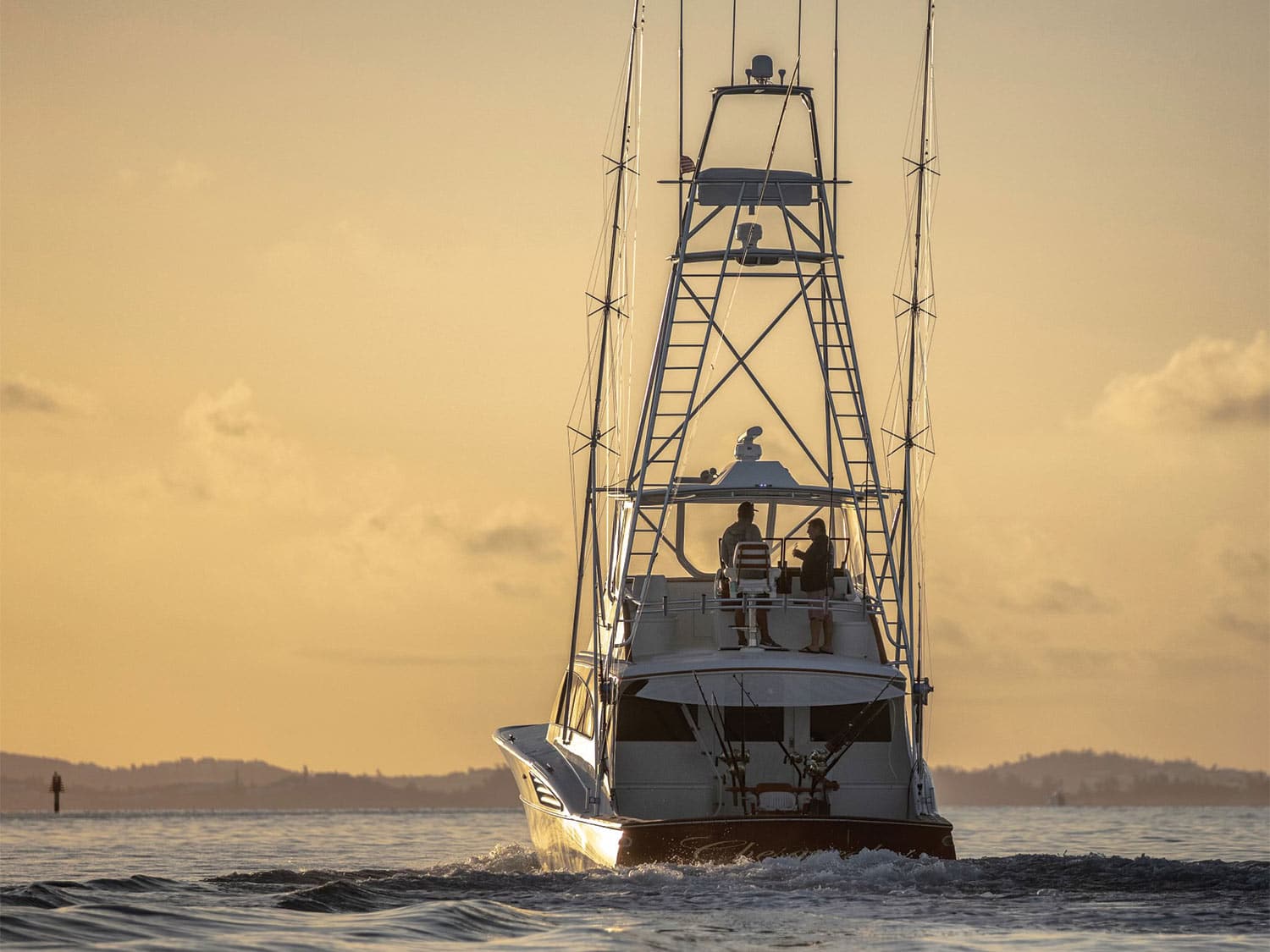
When looking at a boat's profile with an enclosed salon, take note of the side windows' nuances. Details in the shape, the way they curve aft or come to a point, can be used to identify the builder. A Scarborough window rounds out as you move toward the stern, while the top edge turns downward, making a shape similar to an abstract artist's rendition of a cat's paw. The lower window line follows the plane of the water and remains flat. Spencer windows have a similar appearance to current Scarborough windows, however the lines taper to what appears as a narrower point. Jarrett Bay is currently using a similar approach, except that its windows come to a sharper, more abrupt point toward the stern. Bayliss has taken an entirely different approach to windows, one inspired by a popular target species. "White marlin are one of my favorite fish," Bayliss explains, "and the window line we picked for our builds was inspired by the fish's pectoral fin." The window gradually tapers off toward the stern, eventually narrowing to a rounded point that runs parallel with the waterline rather than the sheerline. Both bow flare and tumblehome are often best assessed from a head-on perspective. Jarrett Bay tends to emphasize flare and tumblehome, holding on to some of those beautiful characteristics that defined early classic Carolina lines. Spencer and Winters bring a moderate amount of flare and tumblehome to their boats as well, but Jarrett Bay seems to be the traditionalist of the group. Meanwhile, Bayliss and newer Scarborough builds have a far more reduced amount of flare and tumblehome. Winter Custom Yachts often stands apart from the group when looking closely at its transoms. "We build more belly into the stern of our boats, so our transom has more curvature," Winters explains. Scarboroughs and Jarrett Bays tend to look thicker at the bottom than their counterparts, and much of that is likely due to the reduced flare in the Scarborough and the greater degree of tumblehome in the Jarrett Bay.
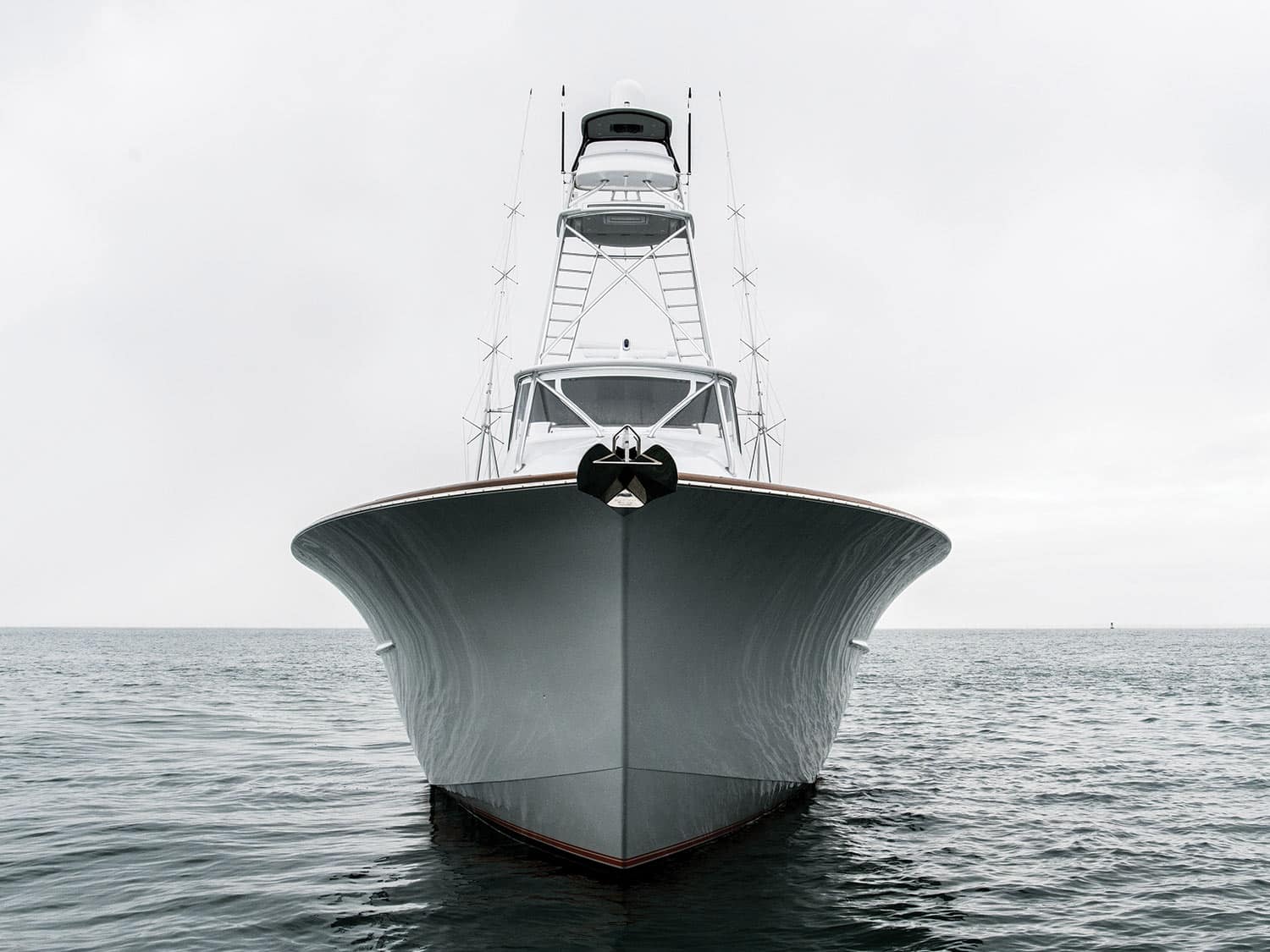
Carolina boats also have a style line called the intermediate guard, which runs along the hull and stops usually somewhere between the house and the bow. The intermediate guard is visible when looking at a boat from the side or head-on, and it helps to further accent the degree of flare and tumblehome in a build. Boats that aren't quite as curvy, such as those from Scarborough and Bayliss, tend to look as if they have a more prominent intermediate guard. When coupled with other features such as flare and tumblehome, the overall look the style line creates does help put the pieces together. All the captains, mates and builders rely on the combination of windows, sheerline and other unique features when viewing a boat on the run to determine its make. Piecing together attributes such as bow flare, sheerline, window shape and tumblehome is often enough to correctly identify a particular builder because these little indicators add up to paint the whole picture. As builders adapt to the changing demands for performance and system inclusion, we can all expect to witness the continued evolution of the classic Carolina custom boat. "We spend a lot of time refining every single angle of the boat so that it looks just right," Winters says. "But at the end of the day, we're all still after that perfect boat."
Although perfection could never be attainable for these craftsmen, it is clear that the goal posts continue to move and there is a perpetual race to meet the next challenge. "Much of what makes these boats different is not visible from the outside," Paul Spencer says. "There are a lot of boats out there that look like each other at this point, but everything you see on the outside is the result of 200 years of boatbuilders constantly evolving together." At least for now, we can celebrate the North Carolina builders' differences without looking under the hood. And from afar, we can still tease out the features that make each one's stable of prize thoroughbreds unique.
This article has been sourced from press releases and cross-referenced with multiple websites. Facts originally seen at Source.
